The Real Problem: Sharing Pitch Decks as a Solo Founder
If you’re a solo founder, sharing your pitch deck sounds simple — until it isn’t.
You want to:
Know if investors actually opened your deck
Understand which slides they spent time on
Keep sensitive information private and controlled
Avoid sending bulky attachments or messy follow-ups
What usually happens instead?
A Google Drive link with zero insight
A PDF emailed into the void
Awkward follow-ups like: “Just checking if you had time to look at the deck…”
This is exactly why many founders discover DocSend.
And also why many bounce off it just as quickly.
Why DocSend Feels Like Overkill for Solo Founders
DocSend is powerful — but it’s built for:
For solo founders, common frustrations include:
High monthly cost compared to actual usage
Complex dashboards when you just want clear signals
Features designed for sales pipelines, not fundraising
Paying for team-based functionality you don’t need
If you’re sending:
You don’t need an enterprise sales enablement suite.
You need secure document sharing with clear engagement signals.
What Solo Founders Actually Need When Sharing Pitch Decks
Let’s simplify this.
A solo founder sharing a pitch deck typically needs five things:

1. Secure Link Sharing
You don’t want your deck forwarded endlessly or indexed publicly.
At minimum, you should have:
This protects sensitive financials and roadmap details.
2. Investor Engagement Tracking (Without the Noise)
You don’t need 20 charts.
You do need to know:
Did they open the deck?
How many times?
Did they come back?
When was the last view?
This is document engagement analytics, not vanity metrics.
3. Clear Follow-Up Timing Signals
The most underrated benefit of pitch deck tracking?
Knowing when to follow up.
If an investor revisits your deck three times in two days, that’s a signal.
If there’s zero activity after a week, that’s also a signal.
This removes guesswork and awkward nudges.
4. Simple Setup (Minutes, Not Hours)
Solo founders don’t have RevOps teams.
The tool should:
If you need a tutorial to upload a PDF, it’s already too much.
5. Affordable Pricing That Makes Sense
Most solo founders are:
Paying $40–$60/month just to share a deck doesn’t add up.
Common (But Risky) Alternatives Solo Founders Use

Before discovering proper document tracking tools, many founders rely on:
Google Drive Links
Pros:
Cons:
Email Attachments
Pros:
Cons:
Notion Pages
Pros:
Cons:
Not designed for confidential fundraising
Easy to duplicate or export
Limited engagement signals
These work — but they don’t scale past the first few conversations.
A Better Middle Ground: Lightweight, Secure Document Tracking
This is where modern DocSend alternatives come in.
Tools designed for:
Solo founders
Small teams
Consultants
Indie builders
They focus on:
One example is Copi.
How Solo Founders Use Copi to Share Pitch Decks Securely
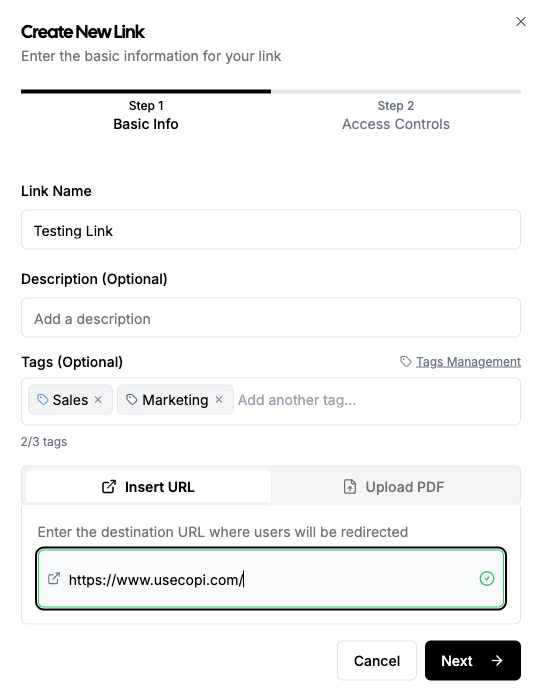
Copi is built for founders who want clarity without complexity.
Here’s how a typical flow looks:
Step 1: Upload Your Pitch Deck
Upload your PDF once. No formatting changes needed.
Step 2: Set Access Controls
Choose how people access your deck:
This ensures only intended recipients can view it.
Step 3: Share a Secure Link
Send the link via:
Email
LinkedIn
WhatsApp
Telegram
No attachments. No version confusion.
Step 4: Track Engagement in Real Time
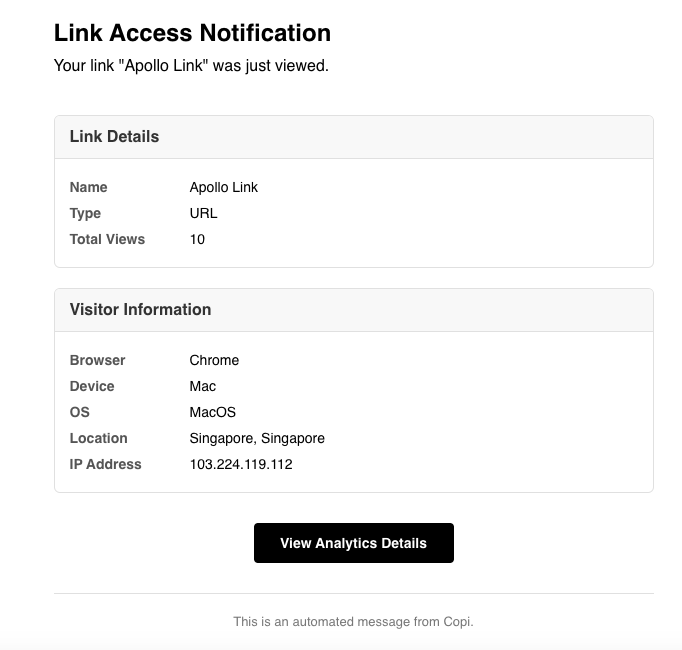
See:
This is prospect engagement tracking, applied to fundraising.
Step 5: Follow Up With Confidence
Instead of guessing, you follow up based on real signals.
That changes the tone of the conversation completely.
Why Engagement Signals Matter More Than You Think
For solo founders, timing is everything.
Engagement data helps you:
Prioritize interested investors
Avoid chasing cold leads
Understand silent “no’s” faster
Focus energy where it matters
This is the same logic sales teams use — applied to fundraising.
It’s not about surveillance.
It’s about respecting your own time.
Security Matters (Especially During Fundraising)
Pitch decks often include:
Revenue numbers
Growth metrics
Customer logos
Product roadmaps
Secure proposal sharing isn’t optional — it’s table stakes.
Good tools should offer:
Controlled access
Link expiration
No public indexing
Clear audit trails
This builds trust with investors, not suspicion.
DocSend vs Lightweight Alternatives: The Solo Founder Lens
FeatureDocSendLightweight AlternativesSetup complexityHighLowMonthly costHighAffordableBuilt forSales teamsSolo founders & SMBsEngagement insightsDeep but complexClear & actionableTime to valueLongerImmediate
If you’re running a large sales org, DocSend makes sense.
If you’re a solo founder sharing a pitch deck?
Probably not.
When You Should Still Use DocSend
To be fair, DocSend is great if:
You’re running a large fundraising process
Multiple teammates manage outreach
You need advanced data rooms
You’re already embedded in the DocSend ecosystem
But most early-stage founders don’t start there.
A Practical Checklist for Solo Founders
Before choosing a pitch deck sharing tool, ask:
Can I see when someone opens my deck?
Is the link secure and controlled?
Can I set this up in under 10 minutes?
Is the pricing reasonable for solo use?
Does this help me follow up better?
If the answer is “yes” across the board, you’re on the right track.
Final Thoughts: Keep Fundraising Simple
Fundraising is already hard.
Your tools shouldn’t add friction.
Solo founders don’t need:
Overbuilt dashboards
Enterprise pricing
Complicated workflows
You need:
That’s it.
If DocSend feels heavy, you’re not wrong — you’re just not the target user.
Want to Share Pitch Decks Securely (Without Overpaying)?
If you’re looking for a simple, affordable way to track pitch deck engagement, tools like Copi are designed specifically for solo founders and small teams.
Start simple. Track what matters. Follow up with confidence.
