The Hidden Risks of Sharing Proposals Over Email
Since the early days of digital sales, email has been the default channel for sending proposals. It feels convenient. It feels familiar. And for many sales teams, it feels like the fastest way to push deals forward.
But today’s sales environment has changed. Buyers expect transparency, timely follow-ups, and a polished experience. Meanwhile, sales teams are expected to work smarter using data and insights—not guesswork.

All images in this blog designed by Freepik
The problem? Email attachments were never built for modern sales workflows. They expose sensitive documents to unnecessary risks, limit visibility for reps, and create operational inefficiencies that quietly reduce win rates.
This article breaks down the hidden dangers behind emailing proposals, why they’re more serious than most teams realize, and what forward-thinking sales teams are using today instead.
Once You Hit “Send,” You Lose All Control
The moment a proposal is emailed as an attachment, it’s out of your hands forever.
Sales reps have no control over:
Who actually opens the file
Whether it’s forwarded internally (or externally)
Whether outdated versions stay in circulation
Whether it’s downloaded onto personal devices
How long the file remains accessible
Whether the content is screenshot, printed, or shared
This lack of control is especially risky when proposals contain pricing, margin details, technical specs, or contract terms.
A forwarded email can unintentionally expose sensitive information to:
Competitors
Procurement teams prematurely
Teams not involved in the evaluation
Old stakeholders long after a deal ends
For many organizations—especially SaaS, finance, consulting, and agencies—this creates unnecessary exposure. In competitive deals, it can instantly weaken negotiation leverage.
No Visibility Means No Ability to Follow Up Effectively

The biggest weakness of email? Zero insight into engagement.
With traditional email attachments, you can’t see:
If the prospect opened the document
How many times they viewed it
Which pages they spent the most time on
Whether the document was shared internally
Who else in the organization is looking at it
What parts of the proposal created the most (or least) interest
This forces reps into guesswork:
“Should I follow up today?”
“Did they even read the proposal?”
“Are they evaluating or ignoring us?”
“Is it too early to nudge them? Or too late?”
Perfect follow-up timing—something proven to increase close rates—is impossible without knowing whether prospects are engaging.
Modern sales hinges on understanding buyer behavior. Email gives reps none of that.
Email Filters Often Block or Quarantine Attachments
Many organizations have strict email security settings that:
Block large PDF attachments
Send unknown attachments to spam
Quarantine ZIP files
Reject messages with embedded links or files
Filter emails from new external senders
Sales reps frequently send proposals that never reach the primary inbox—yet they continue following up assuming the prospect has seen it.
In reality, the proposal could be:
A deal can stall for days simply because an email never arrived.
Email Is Not Secure Enough for Proposal Sharing
Despite how familiar it is, email is one of the least secure channels for sharing confidential sales materials.
Once downloaded, proposals can be stored in:
If even one stakeholder’s inbox is compromised, every attached file becomes exposed.
This is far from theoretical. In many industries, especially those handling financial or customer-specific data, email sharing is discouraged or outright banned for sensitive business documents.
Proposals often contain:
These documents deserve security controls that email cannot provide.
Version Confusion Slows Deals and Causes Misalignment

Email automatically creates version chaos.
A typical scenario:
You send V1.
The prospect asks for changes.
You send V2.
Two days later, they reference V1 again.
Someone on their team forwards the wrong version internally.
Suddenly:
Stakeholders are evaluating outdated numbers
Old features accidentally resurface in discussions
Approval delays arise from misalignment
Pricing inconsistencies appear during negotiation
Version confusion is one of the most common and underreported ways deals slow down.
Email has no mechanism to centralize or update proposals. Once a file is sent, it lives permanently as-is.
No Audit Trail or Documentation for Compliance
Many companies—especially in finance, legal, technology, and enterprise sales—require traceability.
Email offers none.
There’s no authoritative record of:
Who opened a proposal
When it was opened
How many times it was accessed
Which stakeholders engaged
Whether content was shared across departments
This hurts:
Sales managers, who can’t evaluate deal health
Revenue operations teams, who lack insight
Legal teams, who require logs
Account executives, who need engagement data to prioritize accounts
A modern sales process needs an audit trail. Email provides only a sent timestamp—and nothing else.
Follow-Up Timing Becomes Guesswork

One of the biggest drivers of closed-won deals is the timing of follow-ups.
But when proposals are sent over email, reps have no idea:
This leads to:
Follow-ups that feel too aggressive
Follow-ups that come too late
Deals going cold due to poor timing
Prospects feeling misunderstood
Reps are expected to be precise, yet the tools they rely on offer no precision at all.
Why Modern Sales Teams Are Moving Away From Email
Forward-thinking teams are switching to secure, intelligent sharing tools because they solve the exact problems email creates.
These platforms allow reps to:
See real-time engagement
Know the moment a prospect opens a proposal.
Track page-by-page insights
Understand which sections matter most.
Control access
Require email verification or passwords.
Use expiring links
Ensure proposals disappear when needed.
Prevent uncontrolled forwarding
Keep sensitive content contained.
Update documents in real time
Ensuring prospects always see the latest version.
Guide perfect follow-up timing
Data informs the next move.
Instead of guessing, reps act with confidence.
What a Modern Proposal-Sharing Workflow Should Look Like

A secure, buyer-friendly workflow typically includes:
1. Authentication
Viewers confirm their identity before opening.
2. Expiration controls
The document becomes inaccessible after a defined period.
3. Version control
Update content without sending a new link.
4. Real-time analytics
View notifications, time spent per page, number of visits.
5. Forwarding safeguards
Access only for intended viewers.
6. Centralized analytics
Managers and RevOps get visibility across teams.
7. Professional presentation
Consistent branding, layouts, and buyer experience.
These aren’t “nice-to-have” features anymore—they’re becoming standard expectations.
The Business Impact of Sticking With Email
Teams that continue sharing proposals over email face:
Lower win rates
Poor follow-up precision
Exposure to security risks
Longer sales cycles
No visibility into buyer intent
Higher operational friction
Lost opportunities due to misaligned versions
The costs accumulate quietly across quarters and deals.
Conclusion
Email was never designed to be a secure, intelligent proposal-sharing system.
Modern buyers expect clarity, timely communication, and a smooth evaluation experience.
Modern sales teams need insights, control, and accuracy.
Every organization—startup, SMB, or enterprise—benefits from moving beyond email attachments to tools that protect proposals and illuminate buyer behavior.
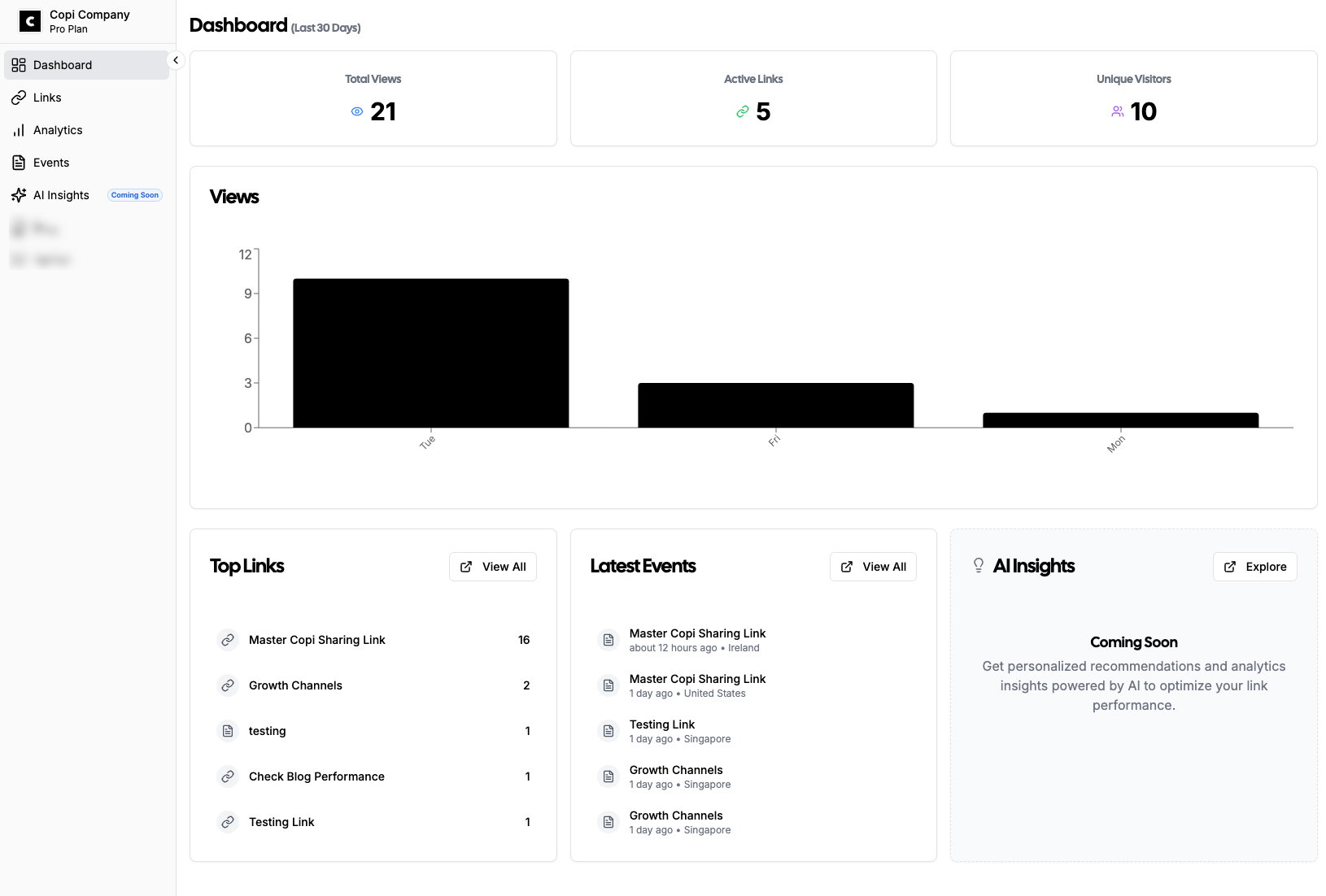
If you’re exploring simpler, secure proposal sharing with real-time insights, you can try tools like Copi, which now offers a free tier and takes only minutes to set up.
