This Wasn’t Supposed to Be a “Startup Story”
Copi didn’t start with a pitch deck, a big vision slide, or a market-sizing spreadsheet.
It started much quieter than that.
In 2025, I was holding onto a full-time job while teaching myself how to code with AI tools—mostly out of curiosity. I wasn’t trying to become a “founder” again. I just enjoyed learning, building small things, and seeing ideas come to life.
I’ve always believed in building small, useful products—tools that solve real problems without unnecessary complexity. That belief runs through everything I build, and it’s something I write about openly on yelston.com.
Copi grew out of that mindset.
Learning to Build With AI (and Enjoying It)
AI changed how I approached building.
Instead of needing everything perfectly planned, I could:
Experiment faster
Ship imperfect ideas
Learn by doing
I started building small internal tools for myself—things I wished existed or didn’t want to pay for. Some worked. Some didn’t. All of them taught me something.
Then I got laid off.
Unexpected, uncomfortable—but also clarifying.
With more time and less pressure to “optimize,” I leaned fully into building. Not chasing growth, not chasing funding—just enjoying the process and following real problems I personally felt.
Copi came from one of those problems.
The Moment That Made Me Question Document Sharing Tools
Like many people, I had been using DocSend on and off.
At first, it made sense:
You want to know if someone opened your deck
You want some level of control
You want visibility beyond email attachments
But over time, things started to feel… off.
After their acquisition, DocSend became:
More expensive
More cluttered
More enterprise-focused
What used to feel like a simple tool started to feel heavy. Pricing crept up. Features piled on. And for someone just trying to share a proposal or pitch deck, it felt like paying for far more than I needed.
Worse, when I didn’t want to pay?
I fell back to Google Drive links or email attachments—tools with almost zero visibility and weak access control.
That gap bothered me.
The Real Problem Wasn’t “Tracking” — It Was Uncertainty
The frustration wasn’t about analytics dashboards.
It was about not knowing:
Sales teams deal with this uncertainty every day. Founders do too.
You send something important—a proposal, a deck, a doc—and then you’re left guessing. Guessing leads to awkward follow-ups, missed timing, or lost momentum.
Most tools solved this by becoming more complex.
I wanted to solve it by becoming more focused.
Building Copi as a Tool I Actually Want to Use
I didn’t set out to “build a DocSend competitor.”
I set out to build something I’d personally use and happily pay for.
Copi started with a simple question:
What’s the minimum a document-sharing tool needs to be genuinely useful?
The answer wasn’t dozens of features.
It was:
Secure link sharing
Clear document engagement analytics
Simple controls (passwords, expiry, email verification)
A price that didn’t feel punishing
Everything else was noise.
Why Simplicity Became a Core Principle
A lot of modern SaaS products confuse power with complexity.
Copi intentionally avoids that.
You don’t need:
You upload or link a document, share it, and understand what happens next.
That’s it.
This simplicity is deliberate—not because Copi is “basic,” but because clarity matters more than feature count.
Security Without Making Things Awkward
One thing I didn’t want to compromise on was security.
Sales documents often include:
Copi includes:
But all of it is designed to feel natural—not like jumping through hoops.
Security should protect conversations, not slow them down.
Why Copi Is Affordable (and Stays That Way)
Pricing is a product decision.
I’ve used tools that felt like they were designed to:
Lock you in early
Upsell aggressively
Penalize small teams
Copi intentionally takes a different path.
It offers enterprise-grade document tracking at a price that makes sense for:
Founders
Freelancers
Small sales teams
Growing SMBs
This isn’t about being “cheap.”
It’s about being fair.
Building Copi Alongside Other Tools
Copi wasn’t built in isolation.
Along the way, I built other small tools—some public, some personal. Each one reinforced the same lesson:
Tools are better when they come from lived frustration, not market research alone.
Building became something I genuinely enjoyed again. Not for outcomes. Not for metrics. For the process.
Copi just happened to be the one that stuck.
What Copi Means to Me Today
Copi is still early.
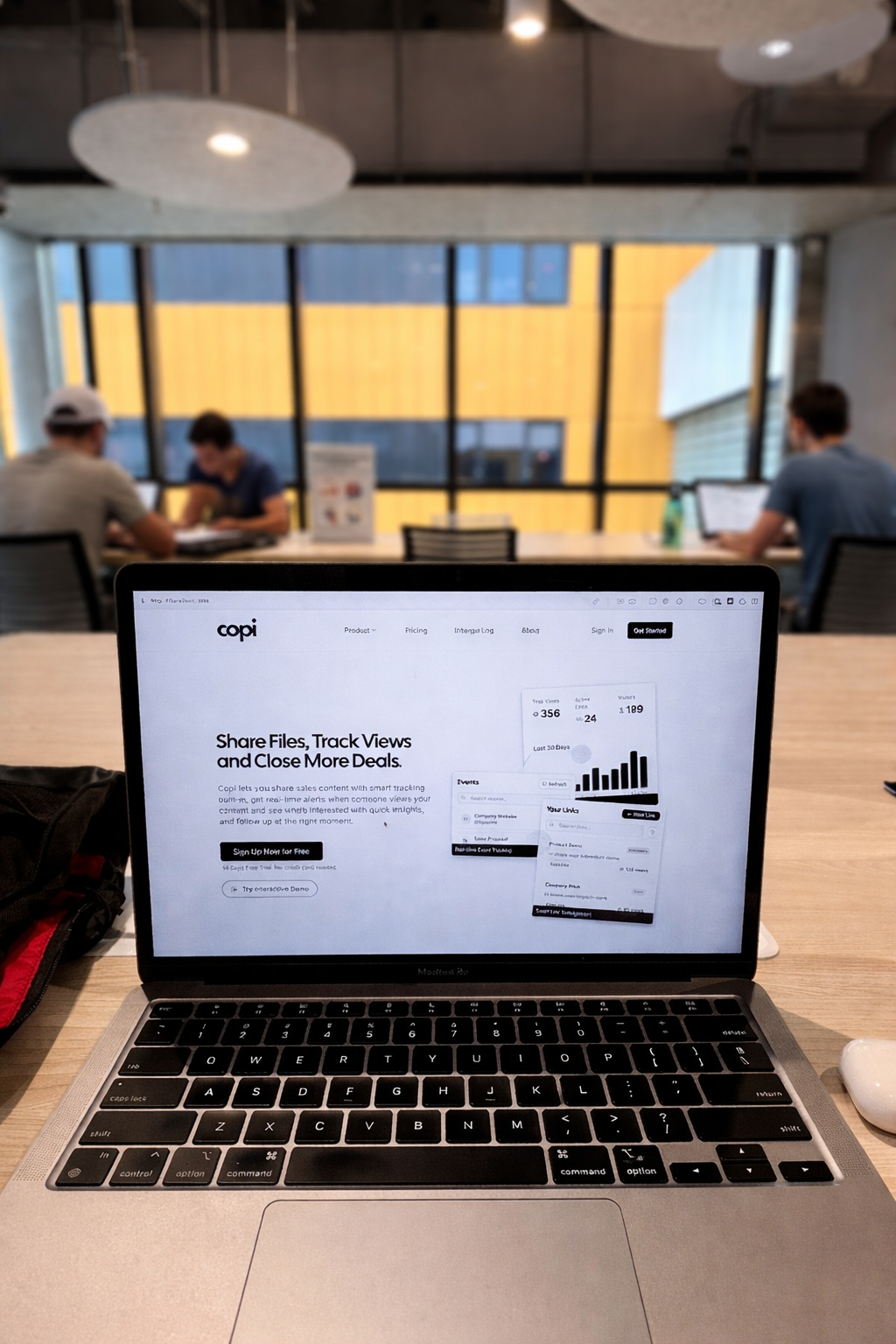
It’s not perfect.
It’s evolving.
And it’s shaped heavily by real user feedback.
But it represents something important to me:
It’s a reflection of how I like to build—and how I want tools to feel.
Why This Story Matters (Especially for Users)
There are many document sharing tools.
But tools built from personal frustration tend to care about:
Time
Clarity
Respecting the user
Copi exists because I didn’t want to choose between:
Paying too much
Or knowing nothing
If you’ve ever sent a document and wondered what happened next—Copi was built for that exact moment.
Closing Thoughts
Copi didn’t come from a grand plan.
It came from:
That’s the story behind Copi.
And it’s still being written.
If Copi sounds like something you’d use—or something you wish existed earlier—you can explore it, try it, and see if it fits your workflow. No pressure. Just a tool built from a very real place.
